
 By
By 
Imagine a car racing team preparing for a Grand Prix. The car isn’t tested just once—it’s taken through multiple rounds of speed trials, endurance tests, and safety checks before it hits the track. Similarly, in software development, performance engineering ensures that the “engine” of your application can handle real-world challenges before users experience it.
In the fast-paced world of continuous integration and continuous delivery (CI/CD), performance testing can no longer be an afterthought. It must be an integral part of the pipeline—woven into every phase of development to guarantee reliability, scalability, and speed.
Redefining Performance Engineering in Modern Pipelines
Traditional testing often focused on checking whether the system worked as expected. But in a CI/CD environment, functionality alone is not enough. Performance engineering extends beyond validation—it ensures that applications perform optimally under varying loads.
The concept integrates load, stress, and scalability tests into the CI/CD pipeline, treating them as “quality gates.” Just as race engineers won’t allow a car to compete unless it meets every benchmark, DevOps teams must halt deployments until performance thresholds are achieved.
This mindset shift requires skilled professionals who can design, automate, and interpret performance tests effectively. That’s where structured learning through software testing coaching in Pune becomes valuable—it helps learners grasp both theoretical and practical aspects of integrating such processes within DevOps workflows.
Load Testing: The Heartbeat of Stability
Load testing is like a heart stress test. It evaluates how the system behaves under expected user demand, ensuring that performance remains consistent even during peak times.
In CI/CD pipelines, load tests are often automated and triggered during build or staging phases. Tools like JMeter, Gatling, or Locust simulate concurrent users and transactions, helping teams detect slow response times or resource bottlenecks early.
The results from load testing don’t just indicate stability—they guide optimisation efforts. When done continuously, they serve as a living metric of how well each new build performs compared to the previous one.
Stress Testing: Finding the Breaking Point
If load testing is about stability, stress testing is about endurance. It’s the deliberate act of pushing an application to its limits until it breaks. This helps uncover the system’s weak spots and ensures graceful failure rather than catastrophic collapse.
In CI/CD, stress tests can be automated to run after major code changes or before large-scale deployments. They identify how systems respond to traffic surges, memory leaks, or database overloads—critical scenarios for modern cloud-native applications.
Understanding how to plan, automate, and interpret stress tests is a skill developed through practice and training. Professional programmes like software testing coaching in Pune often emphasise this skill, preparing testers to design resilient pipelines that can withstand real-world uncertainty.
Scalability Testing: Growing Without Cracks
A successful application isn’t static—it evolves. Scalability testing ensures that as user numbers increase or features expand, the system continues to perform seamlessly. It’s about predicting how growth will affect performance and resource consumption.
Engineers incorporate scalability tests into CI/CD to measure performance across configurations—different cloud nodes, databases, or deployment sizes. The goal is to find the balance between cost and capability, ensuring infrastructure scales smoothly without overspending.
This proactive approach ensures teams are not caught off guard by sudden popularity spikes or seasonal traffic surges.
Integrating Quality Gates: Automating Confidence
Embedding performance checks within CI/CD pipelines turns quality assurance into a continuous feedback loop. Load, stress, and scalability tests act as automated “guards” that stop deployments if metrics fall below acceptable levels.
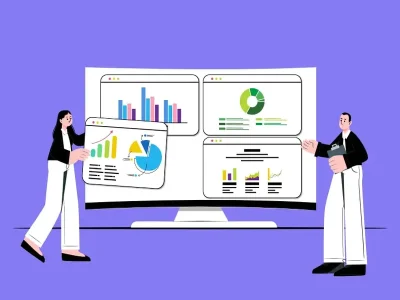
CI/CD tools like Jenkins, GitLab CI, and Azure DevOps can integrate with testing frameworks, running performance scripts automatically and sending results to monitoring dashboards. This ensures issues are caught early, long before they reach production.
By making performance testing part of the delivery DNA, teams shift from reactive firefighting to proactive improvement. The outcome is not just better-performing applications but greater organisational confidence.
Conclusion
Performance engineering isn’t about perfection—it’s about preparedness. By integrating load, stress, and scalability tests into CI/CD pipelines, teams build software that’s ready for the unpredictable nature of real-world usage.
As automation takes centre stage, the need for skilled performance testers continues to rise. Learning these practices through structured environments helps professionals stay ahead in the evolving DevOps ecosystem.
With the right strategy, mindset, and continuous learning, performance testing transforms from a bottleneck into a catalyst for faster, safer, and more reliable delivery.













Comments