
 By
By 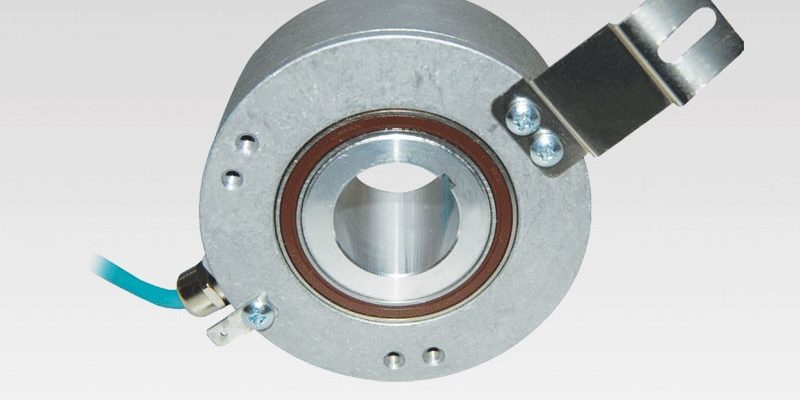
Encoders are essential elements in modern industrialization, robotics, motion control, and industrial appliances. They provide correct feedback about the position, speed, or direction of an alternating shaft or exciting part. Among the different types of free encoders, two technologies dominate the market: absolute encoders and incremental encoders.
Encoder
This electromechanical device converts motion into electrical signals. These signals are interpreted by controllers, PLCs, or drives to monitor movement accompanying precision. Encoders are established in CNC machines, conveyor systems, elevators, science, medical supplies, and many other applications where accurate motion control is necessary.
Encoders generally fall into two main categories—absolute and incremental. Let’s survey how each type does everything.
Incremental Encoders
They generate an order of pulses as the shaft rotates. These pulses are counted by an extrinsic controller to decide movement, speed, and route. Typically, incremental encoders produce two square wave signals known as A and B channels, which are 90 degrees out of phase. This arrangement allows the system to discover the rotation route. Some models also include a tertiary channel, called the index or Z pulse, which provides a citation point once per revolution.
However, incremental encoders do not supply an actual position value. They only report relative drive from a starting point. If capacity is lost or the system is interrupted, the position information is lost. The appliance must return to a known home position before rational operation can continue.
Key characteristics of incremental encoders:
- Output pulses represent movement, conditional position
- Require external answers or controllers
- Lose position data after capacity failure
- Typically more inexpensive
- Simple and widely used
Absolute Encoders
Absolute encoders can be single-turn or multi-turn. Single-turn encoders track position inside one full rotation, while multi-turn versions can track position across multiple revolutions utilizing internal thought or gear mechanisms.
Key characteristics of these encoders:
- Provide exact position at all times
- No need for homing after capacity loss
- More complex within electronics
- Generally more expensive
- Ideal for security-critical orders
Learn the Major Differences
Although both types act similar functions, the following factors focus their core dissimilarities:
1. Position Tracking
Incremental encoders track only relative change. They rely on an external structure to count pulses and determine position. Absolute encoders, in another way, always output the exact position without needing reference calculations.
2. Behavior After Power Loss
This is one of the biggest distinctions. When capacity is interrupted, incremental encoders lose their position information and must be re-homed. Absolute encoders hire their position data and resume from where they stopped.
3. Complexity and Cost
Incremental encoders are simpler in design and therefore more inexpensive. Absolute encoders include more progressive electronics and communication interfaces, making them more expensive.
4. Installation and Setup
Incremental systems require additional parts such as answers and homing routines. Absolute encoders are easier to mix into modern control architectures because they deliver ready-to-use position principles.
When to Use Incremental Encoders
Common use cases contain motor speed monitoring, conveyor belts, simple locating systems, and basic technical automation supplies.
When to Use Absolute Encoders
They are commonly used in robotic arms, elevators, pharmaceutical devices, aerospace systems, and CNC machines where lost position data manage cause errors or downtime.
Conclusion
Both sure and incremental encoders play essential roles in administrative technology. Neither is inherently “better” than the other—they plainly serve different purposes. By cautiously judging accuracy essentials, operational conditions, and budget, trades can guarantee trustworthy performance and general effectiveness in their mechanization systems.














Comments