
 By
By 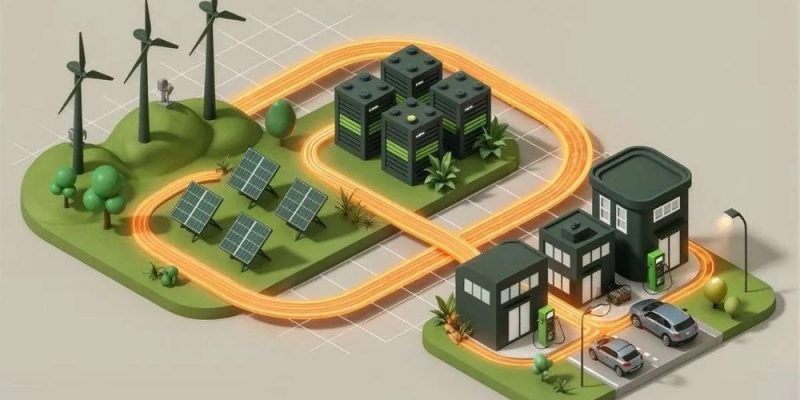
The phrase “smart grid” gets used so often that it can start to feel hollow. Committees talk about it. Reports celebrate it. Budgets are built around it. And yet, in many parts of India, the gap between what has been announced and what has been delivered remains wide.
The smart energy meter at the centre of this shift is a proven piece of technology. It works. The harder question is not whether the tools exist. It is whether the systems around them are strong enough to make them count.
Good Technology Is Not Enough on Its Own
It is worth being clear about what a smart meter can do. It removes the need for manual meter reading. It sends consumption data back to the utility automatically. It can detect tampering, flag outages, and support prepaid billing. It gives both utilities and consumers a level of visibility that was simply not possible before.
But a smart meter on a wall is not the same as one working as intended. For the device to deliver its full potential, several things must be in place. The communication network has to carry data reliably.
The software at the utility end has to receive, store, and process it correctly. The billing system has to reflect what the meter records. And those managing the network have to know how to act on what they see.
Each of these steps is an execution problem, not a technology one. None are solved by the meter itself.
Where the Gaps Show Up
India’s rollout of smart meters under its national distribution reform scheme is, by any measure, a significant undertaking. Progress has been real. States like Assam have shown what strong execution looks like, with around 44% of consumers saving roughly 50 units per month through accurate billing and consumption tracking, and distribution companies recording measurable reductions in losses.
But the picture across the country is uneven. Some states have barely begun. Others have sanctioned large numbers of meters but installed only a fraction. In several areas, meters have been fitted but are not communicating, meaning the data they generate never reaches the utility. The hardware exists. The system around it does not yet.
This is not a technology failure. It is an execution failure. The reasons are familiar: delayed payments to service providers, patchy communication infrastructure, legacy billing systems that cannot absorb new data, and limited capacity within utilities to manage what smart metering demands.
The Data Problem Nobody Talks About Enough
One of the most overlooked problems is what happens after a smart meter starts sending data.
A single device transmitting readings at regular intervals generates far more information than a conventional meter ever could. Multiply that across millions of households, and the volume becomes enormous.
The promise of smart metering, for loss detection, demand forecasting, or fault management, depends on using that information well.
Most utilities are currently using only a fraction of the data available to them. Not because the information is absent, but because the analytical capacity to act on it is still developing.
Dedicated data teams are rare. Integrated systems connecting meter readings to billing, field operations, and planning are not yet standard. The insights exist in the numbers. Extracting them requires skills, systems, and a willingness to change how decisions are made.
Execution Requires Coordination Across Many Layers
A smart meter sits at the end of a long chain. At one end are policymakers and regulators who set the rules. Then come utilities responsible for procurement and deployment, service providers handling installation, communication networks carrying data, and finally, the consumers who live with the results.
For execution to succeed, all these layers need to move together. A well-designed device, such as the Genus Smart Meter, built for India’s varied grid conditions, can only perform if the infrastructure around it is equally dependable. Delays at any link create delays across all of them.
Payment security matters. When utilities fall behind on dues to installation partners, timelines slip. Regulatory clarity matters. States without clear mandates on prepaid metering move more slowly. Consumer communication matters too. People who do not understand what their smart meter does are less likely to cooperate with the transition.
The States That Are Getting It Right
Assam is a strong example of what focused execution delivers. With over 4.9 million smart meters installed and documented consumer outcomes like fewer billing disputes, lower losses, and measurable monthly savings for nearly half its consumers, it demonstrates that the model works when the operational layers behind the meter are built properly.
Other states are catching up, but the gap between leaders and laggards is real. The difference is rarely the technology chosen. It is the quality of implementation and the institutional commitment behind it.
What This Means Going Forward
India’s grid modernisation is an ongoing effort, not a one-time project. The smart energy meter is one part of a broader transformation that includes automation, renewable integration, and two-way energy flows from rooftop solar and storage.
All of that requires execution at every level. The technology has proved itself. What the sector needs now is organisational focus, funding discipline, and coordination to deliver consistently across every state.
A smart energy meter on every wall is a goal well within reach. Getting there depends less on what the device can do and more on the commitment to see it through.












Comments