
 By
By 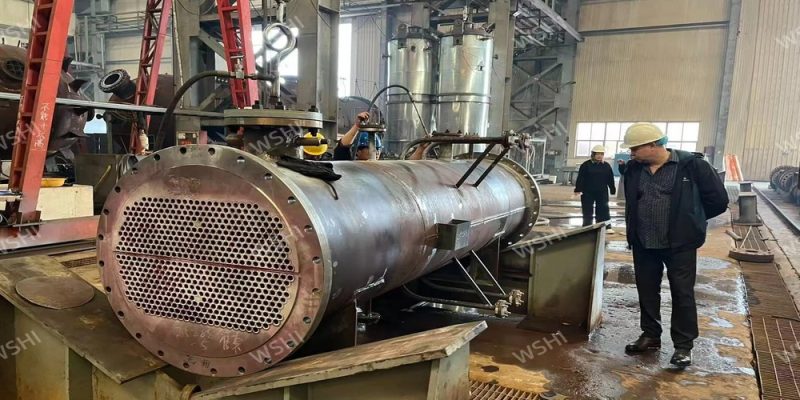
Industrial heat exchangers do not mix but move heat energy between two or more fluids. These gadgets are essential in air conditioning, manufacturing facilities, and electricity production sites. This guide outlines the major forms, uses and the selection criteria of industrial heat exchangers.
Learning more about heat exchangers
Shell and tube heat exchangers
This design consists of a set of tubes being placed within a cylindrical shell, one fluid being circulated through the tubes and the other surrounding the tubes. Shell and tube are used to deal with high pressure and temperatures so that they can accommodate demanding industrial processes. The characteristics of the shell and tube heat exchangers are as follows:
- High pressure capability: The strong structure can withstand high working pressures that would ruin other types of heat exchangers.
- Easy maintenance access: Removable tube bundles give access to the cleaning and replacement of particular tubes and not the entire unit.
- Wide temperature range: Can effectively operate with both cryogenic temperatures and several hundred degrees Celsius.
- Scalable design: Units can be as small as process skids, or large-scale installations with thousands of square meters of a heat transfer surface.
- Fouling resistance: When deposits form straight tubes can be cleaned by mechanical means such as using brushes or by using high pressure jets of water.
Air-cooled heat exchangers
Not water is used to cool process fluids in these units but ambient air which avoids the use of cooling towers or water treatment. The air-cooled exchangers are applicable in areas with water shortage or rigorous environmental discharge requirements. Here are the features of air-cooled heat exchangers:
- No water consumption: Removes water acquisition, treatment and disposal expenses of wet cooling systems.
- Reduced environmental impact: There is no thermal pollution of water bodies, evaporation and drift of water.
- Low maintenance operation: Not many moving parts when compared to wet cooling systems, only fans need some regular care.
- Cold climate suitability: Can be adequately utilized in the freezing climate with no freeze danger of water-based cooling.
- Remote location viability: Can operate where there is no water supply or trucking in water would be expensive.
Finned tube heat exchangers
The outer of tubes has many long surfaces that augment the area of heat transfer to air or gas service. Finned tubes overcome the low heat transfer efficiency of gases with respect to liquids. Here is the features of the finned tube heat exchangers:
- Increased surface area: Fins enhance the surface area five to twenty -fold with respect to bare tubes.
- Different types of fins: Various service conditions include plate fins, spiral wound fins or extruded fins.
- Corrosion-resistant materials: There are options of aluminum, copper or stainless steel fins, depending on the temperature and the type of corrosive environment.
- Frost control capability: The designs support defrost cycles in refrigeration as well as heat pump systems which operate below the freezing point.
Selecting the right heat exchanger for the application
Selecting the right type is done through studying of fluid properties, temperatures, pressures and the space available. Poor choice causes low performance, high cost of operation or early failure. The following are the selection criteria of industrial heat exchangers:
- Fluid compatibility: The materials should resist corrosion of both the process fluid and the fluid in service within the operating temperature range.
- Pressure and temperature limits: Choose a design with the highest allowed operating conditions, such as start-up conditions and upset conditions.
- Allowable pressure drops: Pumps and fans have limited pressure capacity; pressure capacity of heat exchanged must fall within budget of available pressure drop.
- Maintenance access: Think of how frequently it may be necessary to clean, and make sure a location is favored so that it is easy to access with maintenance equipment.
Finally
Heat exchangers used in industrial applications, particularly in HVAC systems and manufacturing processes, have critical applications in most industries. Proper choice of the appropriate type depending on the fluid characteristics, the working conditions of the systems and maintenance needs will provide efficient and successful operation. Constant inspection and cleaning prolong the life of equipment as well as keeps them at full thermal output.











Comments