
 By
By 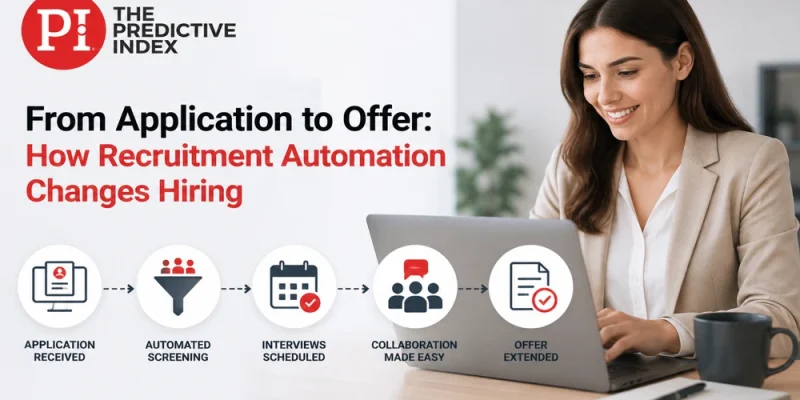
Think about when you apply for a job and then hear nothing. Days pass without an update. You drop an email and get no response. Then, you are to schedule an interview after an exchange of multiple messages.
Enable a hiring process where every step is obvious & timely.
This is where recruitment automation could come in handy. Automation can leverage routine parts of hiring and create a pleasant experience for the candidates, as well as recruiters.
Stage 1: The Application Arrives
One job posting can go on to receive hundreds of applications. If you read all resumes by hand, it consumes a lot of time.
Automated recruitment systems can aggregate applications in a single location. They can also be used to classify candidate information and apply pre-defined screening criteria.
Software, however, should not be driving every hiring decision. Instead, it can aid recruiters in handling a high proportion of applications more effectively.
Stage 2: The Candidate Must Answer
Silence after applying leaves candidates wondering about whether their application made it.
An application can generate an acknowledgement as soon as it is received in the automated workflow. It can also give details on what will happen next.
This eliminates the need for recruiters to send the same generic message again and again.
For candidates, it provides clarity.
Stage 3: More Structured Screening
When applications are collected, what recruiters must do is note down the candidates who fulfill the minimum requirements.
HR automation enables to sort applications based on the hiring team’s criteria. The criteria may involve skills, experience, qualifications, or other specific job requirements.
This allows recruiters to focus their attention on candidates who require more human review.
You should periodically review the rules for screenings. The presence of poor criteria can eliminate many suitable applicants.
Stage 4: Your Interview is Scheduled
It can become perplexingly difficult to get a time for the interview.
A recruiter suggests a time. The candidate is unavailable. Another time is offered. More messages follow.
This exchange can be cut down by automation in scheduling, where available time slots are shown and candidates select from them.
This will then save the recruiter time on calendar coordination.
Stage 5: Interviews Still Require Humans
Technological incompetence is where technology must cede.
A system can manage interviews and their scheduling, but there is no substitute for human contact. You still have to talk to candidates, ask relevant questions, get a sense for their experience, and determine if they are a fit for the role.
The human factor should not be taken away from recruiting automation for this process.
Stage 6: The Hiring Decision
Post-interviews, the recruiter will need to compile a comparison of candidates and obtain feedback, your records may not be fully updated, and how do you communicate decisions?
Automated workflows can assist with managing these admin interventions. However, ultimately the decision should come only from competent individuals who comprehends the purpose and scope of a particular position.
A Better Hiring Experience
Recruitment automation is most effective when it reduces friction in the hiring process. This allows for clearer communication with candidates and frees up recruiters to focus their time on judgment-heavy work that can be paired with a human touch.
The intent is not to humanize hiring. The goal is to free up recruiters from repetitive tasks so that they can spend more time being human.














Comments